How to Manage a Micromanager (Before It Puts Your Job at Risk)
Recognize it, navigate it, and get the leash off: 10 moves that actually work
TL;DR
Micromanagement is rarely a verdict on your competence. As Mary Abbajay documents in Managing Up, it's two needs colliding: your need for autonomy against your manager's need for control, and underneath that control is usually fear. Left unmanaged, the pattern erodes your role, your health, and your performance, and it's often the first stage of job risk. You don't earn autonomy by demanding it. You earn it by lowering the fear that created the grip. Here are 10 moves to do exactly that.
Quick Takeaways
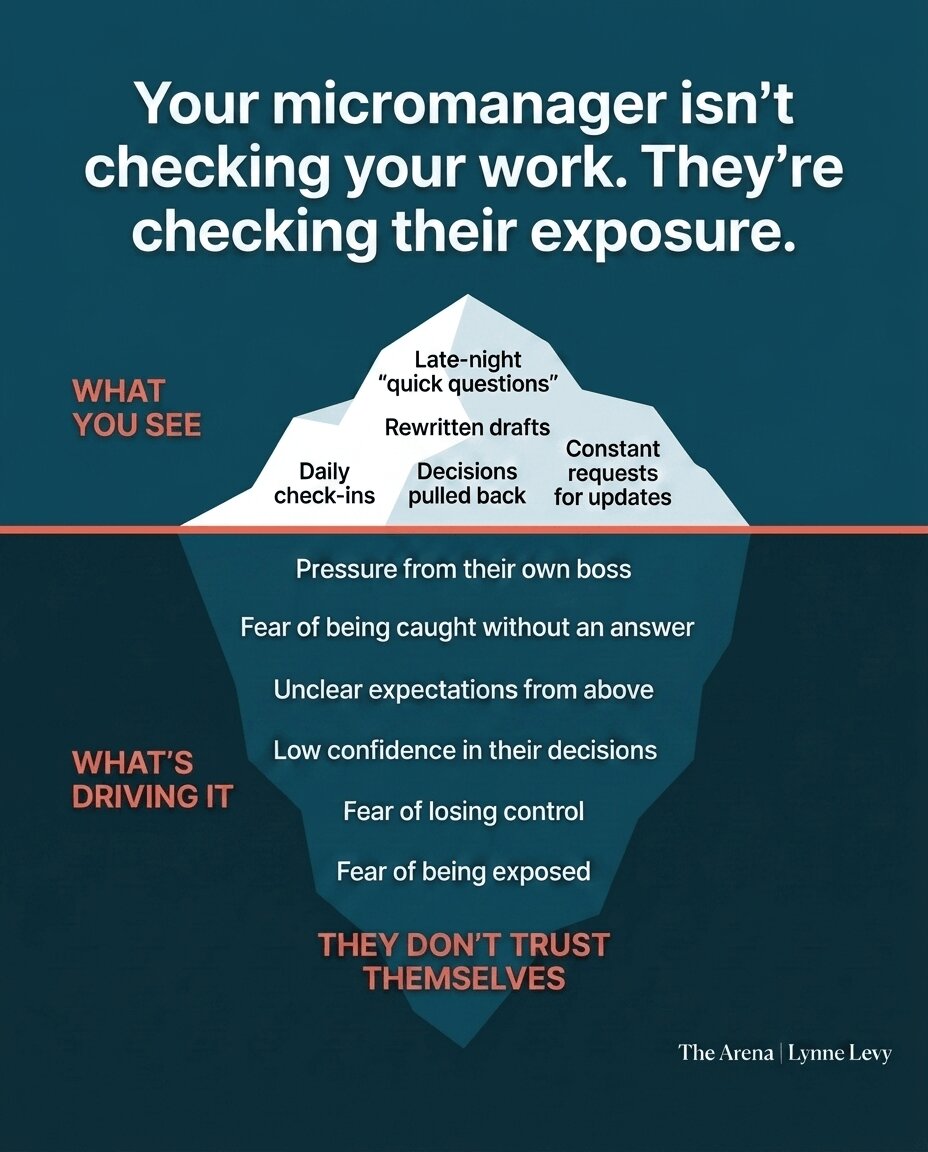
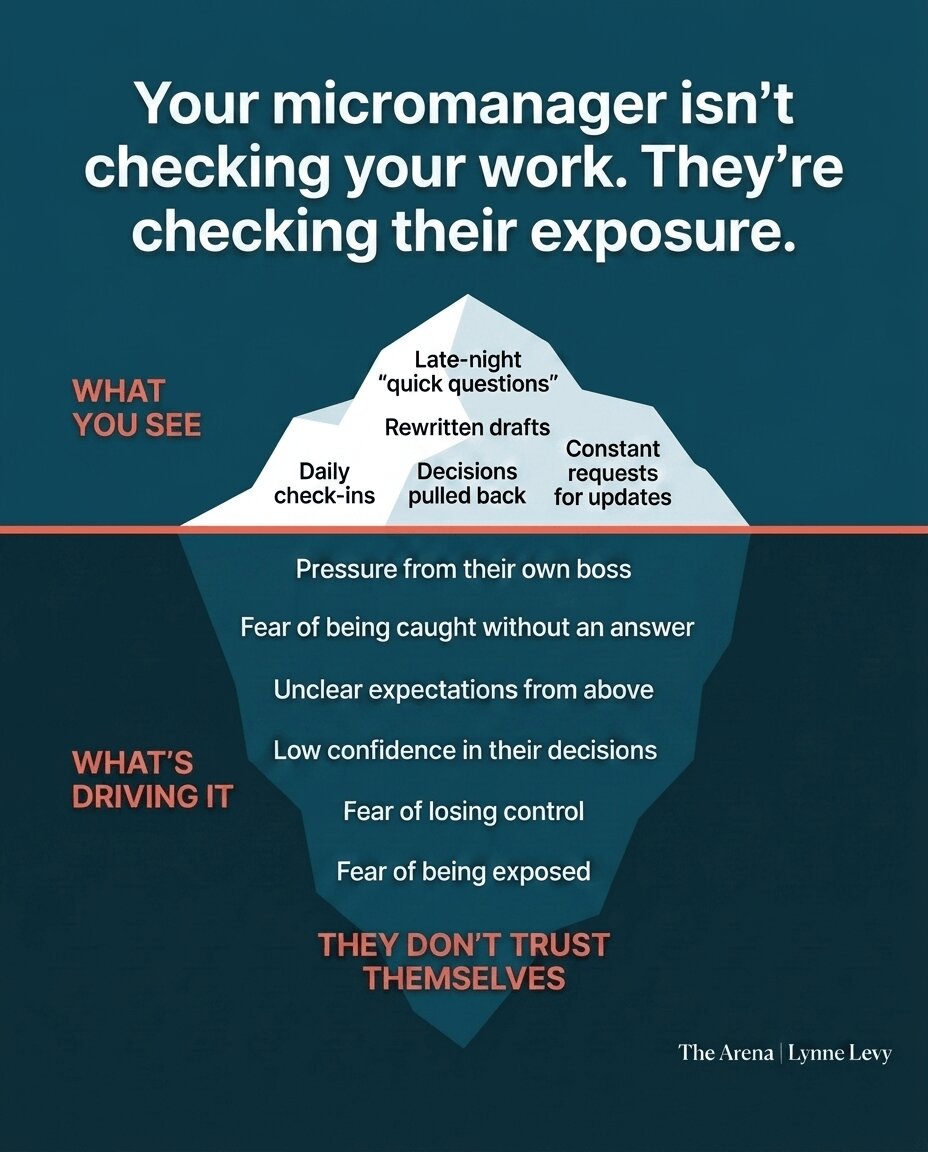
Micromanagement is the behavior you can see. Fear is what sits underneath it. Your micromanager isn't checking your work, they're checking their exposure.
Job risk rarely starts with a PIP. It starts with a pattern: check-ins that multiply, drafts rewritten, decisions pulled back.
The counterintuitive move is to over-communicate before they ask. You're not reporting more, you're removing the reason to chase you.
Mary Abbajay's research on managing up is clear: you earn autonomy gradually by building trust, not by fighting for space.
If the pattern is escalating toward documentation, waiting it out is a strategy. It's just your manager's strategy, not yours.
The Pattern Nobody Names
A Director I coach was getting "quick question" Slacks at 9:14pm.
Weekly check-ins became daily. Drafts were rewritten. Decisions kept getting pulled back for approval.
She read it the way most senior leaders would: he doesn't trust me.
The truth was more uncomfortable. He didn't trust himself. Someone above him was asking questions he could not confidently answer. Her updates became his protection. Her drafts became his evidence. Her decisions became his risk.
Here's the unspoken rule: micromanagement is almost never about your work. It's about your manager's exposure. And whether that's fair or not doesn't matter, because unmanaged, it will put your job at risk. So the work is learning to manage it.
Mary Abbajay, author of Managing Up: How to Move Up, Win at Work, and Succeed with Any Type of Boss, calls micromanagement one of the most common management dysfunctions in the workplace. Her diagnosis: it pits two basic human needs against each other. Your need for autonomy collides with your manager's need for control.
What her work makes clear, and what most advice misses, is that the control need usually has a source. Pressure from their own boss. Unclear expectations from above. Low confidence in their own decisions. Fear of being caught without an answer.
That doesn't excuse the behavior. But it changes how you manage it. You can't out-perform someone's fear. You can lower it.
How to Recognize Micromanagement Before It Becomes a Job Problem
The pattern is easy to dismiss one incident at a time. Read it as a system instead. You'll see it in patterns:
Check-ins that used to be weekly are now daily
Your drafts get rewritten instead of reviewed
Decisions you used to own get routed back for approval
You're asked to walk through work you already walked through
"Quick questions" arrive at night about things that could wait
Your manager joins meetings you used to run alone
Requests for updates start arriving in writing
The tone shifts from questions to documentation
The last two matter most. When verbal check-ins become written records, the dynamic may be shifting from anxiety to evidence-building. That's the moment to act, not wait.
How to Manage a Micromanager: 10 Moves That Work
1. Send the update before they ask
The single highest-leverage move, and the core of Abbajay's advice: over-communicate, proactively. Every Monday: "Here's where things stand, one risk I'm watching, no action needed from you." You're not reporting more. You're removing uncertainty before it turns into control.
2. Do it their way first
Abbajay is blunt about this: adapt to the boss you have, not the boss you wish you had. Learn their preferred format, channel, and level of detail, and match it exactly for the first stretch. Autonomy comes later. Trust comes first.
3. Anticipate the question behind the question
When they ask "where are we on this?", they're usually rehearsing for a conversation with their own boss. Answer the question they're about to be asked, not just the one they asked you.
4. Flag risks early, always
A micromanager can tolerate bad news. What they cannot tolerate is surprise. "Flagging one risk early so nothing surprises you" does more for your leash than a month of flawless delivery.
5. Close every loop visibly
Don't just do the thing. Show the thing is done: "Decision made, here's the reasoning, no action needed." Open loops are what micromanagers chase. Closed loops are what they learn to trust.
6. Ask the exposure question
In your next 1:1: "What does your boss need to see from our work this quarter?" One question tells them you understand the pressure above them, not just the pressure they're placing on you. It changes the relationship.
7. Replace random check-ins with a rhythm
Propose the structure yourself: a Monday update and a Thursday update in exactly the format they like. Scheduled transparency crowds out surveillance. You control the cadence instead of absorbing theirs.
8. Earn room in small increments
Abbajay's research says trust with a controlling manager is built gradually: perform consistently, communicate more than feels natural, and give them time to adjust to you. Ask for autonomy on one small thing. Deliver. Then ask for the next.
9. Keep your own record
Track what you delivered, when, and what was decided. Quietly, factually, continuously. If the pattern ever escalates toward a PIP, you want your own version of events already written, not reconstructed from memory.
10. Know when managing up isn't the answer
Abbajay draws a hard line: nobody should work for a boss who is abusive, or stay in a situation that damages their health or career. If you've lowered the fear and the grip still tightens, the problem isn't your managing up. That's when you stop adapting and start building a strategy.
When the Pattern Is Bigger Than the Playbook
Six weeks after the Director started with moves 1 and 6, the daily check-ins went back to weekly. Not because she demanded autonomy. Because she made supervising her unnecessary.
But sometimes the check-ins don't relax. The documentation grows. The tone hardens. If your gut says a PIP is being assembled underneath you, do not wait it out. Waiting is a strategy. It's just your manager's strategy, not yours.
That's what The Chess Move is for: one session where we map what's actually happening and build your plan to secure your role. Navigate it instead of reacting to it. It's $597 right now, regularly $997. Book it at lynnelevy.com/the-chess-move.
Frequently Asked Questions
Why do managers micromanage?
Rarely because of your performance. Mary Abbajay's work on managing up shows micromanagement comes from the manager's need for control colliding with your need for autonomy, and that control need is usually driven by pressure from above, unclear expectations, or fear of being exposed. Your updates are their armor.
How do you deal with a micromanaging boss without quitting?
Over-communicate before they ask, adapt to their preferred style first, flag risks early, and propose a structured update rhythm that replaces random check-ins. Then earn autonomy in small increments. You're lowering their fear, not surrendering your independence.
Is micromanagement a sign I'm about to be put on a PIP?
Not always, but watch the escalation: when verbal check-ins become written records and questions turn into documentation, the dynamic may be shifting from anxiety to evidence-building. That's the moment to get strategic, keep your own record, and build a plan rather than waiting it out.
Does confronting a micromanager work?
Demanding autonomy usually backfires, because it raises the fear that created the control. What works is making supervision unnecessary: proactive updates, no surprises, closed loops, and one question that shows you understand their pressure: "What does your boss need to see from our work this quarter?"
When should you stop trying to manage a micromanager?
When the behavior is abusive, when it's damaging your health, or when the grip keeps tightening despite consistent delivery and proactive communication. At that point it's not a communication problem, it's a structural one, and the work shifts from adapting to building your exit or defense strategy.
Lynne Levy is an executive coach for senior product and tech leaders. She publishes The Arena of Work at thearenaofwork.substack.com. If your job feels at risk, book The Chess Move at lynnelevy.com/the-chess-move.
